Source Polishing Machine for Stone Metal and Glass
Find 30 polishing machine options for stone, metal, and glass applications. Compare specifications including motor power, disc diameter, and automation levels from verified suppliers to select the right equipment for your production needs.
Key considerations
Products List


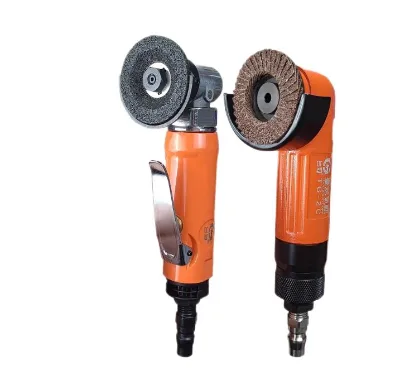


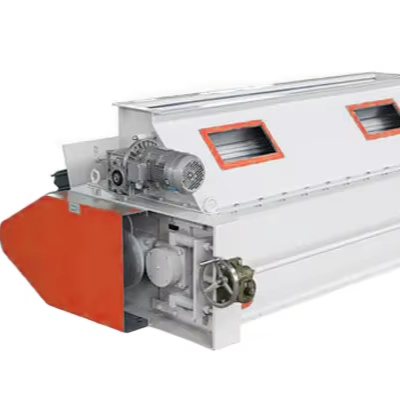


$70000.00 - $75000.00
Moq: 1
Comprehensive Sourcing Guide
Strategic Sourcing Guide for Industrial Polishing Machines
Selecting the correct industrial polishing machine requires a rigorous analysis of technical specifications, material compatibility, and supplier reliability. The market for these machines is diverse, ranging from small-scale units for kitchenware to massive automated lines for stone slab processing. Buyers must navigate a landscape where product attributes vary significantly between models, such as the distinction between disc grinding machines and vibration polishing systems. This guide provides a structured approach to evaluating potential suppliers and machinery, ensuring that procurement decisions are grounded in verified facts and industry standards rather than unverified marketing claims.
Technical Specifications and Machine Classification
The first step in sourcing is defining the precise technical requirements based on the material to be processed. The available data indicates a clear segmentation in the market between machines designed for stone and those for metal. For stone applications, including granite, marble, jadestone, ceramics, and concrete curb, buyers should look for specific configurations such as the "Disc Grinding Machine" or "Stone Polishing Machine." A critical specification to verify is the disc diameter, which in observed models reaches 230mm, suitable for various grinding and polishing tasks. Furthermore, the automation level is a decisive factor; high-end units often feature "Automatic" operation with "PLC Control" or "CNC" systems to ensure consistency in high-volume production.
In contrast, machines intended for metal tube or kitchenware applications operate on different principles. These units may utilize a "Vibration Polishing Machine" or specific stations designed for "Satin (Mat) Finish & Mirror Finish Polishing." The number of polishing stations is a key differentiator, with some models offering three distinct stations to handle multiple finishing stages in a single cycle. Power requirements also vary widely, with observed motor powers ranging from 3kw to 7.5kw, and voltage specifications such as 440V being common for industrial-grade equipment. Buyers must ensure that the machine's power source, typically electricity, aligns with their facility's electrical infrastructure. Additionally, the grinding method, whether "Wet Grind" or dry, must be selected based on the specific material properties and dust control requirements of the production environment.
Material Compatibility and Application Scope
Understanding the specific application scope is vital to preventing equipment mismatch. The data reveals that certain machines are optimized for "Marble, Granite, Jadestone, Ceramics," while others are tailored for "Metal Tube," "Kitchenware," "Cookware," "Pot," "Utensil," and "Round Metal." A machine advertised for stone polishing may not be suitable for metal finishing due to differences in abrasion resistance and the required surface finish. For instance, a "Granite slab polishing line" is designed for large-scale processing with a function specifically for "Polishing Granite Marble," whereas a unit for "Mosaic polishing" might have different dimensional constraints.
When evaluating a machine for "Construction" applications, buyers should verify if the unit can handle "Concrete Curb" and "Cement Brick" in addition to stone. The versatility of the machine is often linked to its "Cutting materials" specification, which lists "Stone Marble Granite Tile" for certain models. It is essential to confirm that the machine's capabilities extend to the exact material composition required for the project. For example, if the production line involves "Glass" or "Ceramics," the machine must be equipped with the appropriate grinding discs and control systems to prevent material fracture or excessive wear. The "Feature" of "High Cutting Efficiency" is a common claim, but buyers should request evidence of this performance relative to the specific material being processed.
Compliance, Certification, and Quality Standards
Compliance with international standards is non-negotiable for industrial equipment, particularly when machinery is sourced from international markets. The observed data lists several certifications, including "CE," "ISO," "GOST," "SONCAP," and "CCC." These certifications indicate that the machine meets specific safety and quality benchmarks for different regions. For instance, "CE" is a mandatory conformity mark for products sold within the European Economic Area, while "CCC" is required for the Chinese market. Buyers must verify that the specific model they are purchasing holds the relevant certifications for their target market, as a machine certified for one region may not be legally compliant in another.
Beyond product certifications, the manufacturer's quality management systems are critical. The data references "ISO9001:2000" as a quality system standard, which suggests a commitment to consistent manufacturing processes. However, buyers should not assume that all listed products automatically satisfy every certification mentioned in a general product description. Instead, they should request the specific certificate for the exact model number, such as "GBMJ-5B" or "GBPLS-600," to ensure validity. Additionally, while "ISO 13485" is mentioned in background contexts, it pertains to medical devices and may not be relevant for general polishing machinery unless the machine is specifically designed for medical component finishing. Buyers should focus on verifying the "Quality System" certification that directly applies to industrial machinery manufacturing.
Cost Drivers and Procurement Parameters
The cost of a polishing machine is influenced by several factors, including motor power, automation level, and packaging requirements. Observed price ranges in the market are extremely wide, spanning from $38 to $1,000,000 USD. This disparity reflects the difference between small, manual units and fully automated production lines like the "Granite slab polishing line." Motor power is a primary cost driver; units with 7.5kw motors will generally be more expensive than those with 3kw motors. Similarly, the inclusion of "PLC Control" or "CNC" systems adds significant value and cost compared to manual or semi-automatic controls.
Packaging and logistics also impact the total cost of ownership. The data shows varied packing methods, including "Wooden Case," "Nude Packing," "Wooden," and "Sea Shipping." Heavy machinery like stone polishing lines often requires "Wooden Case" protection to prevent damage during transit, which adds to the shipping cost. Buyers should also consider the "Capacity" of the machine, which ranges from 400kg to 1000kg in observed models, as higher capacity often correlates with larger dimensions and higher prices. The "MOQ" (Minimum Order Quantity) is another consideration, with observed values ranging from 1 to 2 units. While some suppliers may offer single-unit purchases, bulk orders might yield better pricing, though this is not explicitly stated in the provided facts. Buyers must calculate the total landed cost, including packaging, shipping, and any necessary customs duties based on the "prod_origin," which is listed as "China."
Supplier Evaluation and After-Sales Support
Evaluating a supplier goes beyond the product specifications to include their ability to provide long-term support. A critical attribute listed is "After-sales Service Provided: Service Machinery Overseas." This indicates that the supplier is capable of sending technicians to the buyer's location for installation, maintenance, or repair. For international buyers, this is a crucial factor, as local service networks for specialized machinery may be non-existent. Buyers should verify the scope of this service, including response times, availability of spare parts, and the language capabilities of the support team.
The "Condition" of the machine is another key evaluation point, with "New" being the standard for most industrial purchases. However, buyers should confirm the warranty terms, as the data indicates a "1 Year" warranty is available. This warranty should cover major components like the motor and control systems. Additionally, the "Precision" of the machine, described as "High Precision" in the data, should be verified through sample testing or factory audits. Suppliers who can demonstrate their ability to maintain high precision over time are more likely to be reliable partners. Buyers should also check the "Automation" level, as "Automatic" systems require more complex maintenance and technical expertise than manual units. Ensuring the supplier has the technical capacity to support these advanced systems is essential for minimizing downtime.
Quality Control and Long-Term Procurement Strategy
Implementing a robust quality control strategy is essential when sourcing industrial machinery. Buyers should verify the physical dimensions of the machine against the provided standards, such as "180010001300," "300024001500mm," or "250030002900mm." These dimensions are critical for planning factory floor layout and ensuring the machine fits within the designated space. The "Color" of the machine is often customizable, with "Customer Needing" or "Customer Requirement" listed as options, allowing buyers to match the equipment to their brand identity or safety color codes.
For long-term procurement, buyers should consider the "Life" of the machine and its expected maintenance schedule. While specific lifespan data is not provided, the presence of "High Precision" and "Automatic" features suggests a design intended for continuous operation. Buyers should establish a preventive maintenance plan that includes regular checks of the grinding discs, motor health, and control system integrity. The "Work Purpose," such as achieving a "Mirror Finish" or "Satin Finish," should be validated through trial runs before finalizing the purchase. Finally, buyers should maintain a clear record of all specifications, certifications, and warranty terms to ensure accountability and facilitate future repairs or upgrades. By adhering to these rigorous evaluation criteria, buyers can secure reliable polishing machinery that meets their production needs and ensures operational efficiency.
Comparative Analysis of Machine Types
To assist in decision-making, the following table summarizes the key differences between observed machine types based on the provided data. This comparison highlights the distinct applications and specifications for stone versus metal processing units.
| Feature | Stone Polishing Machine | Metal Polishing Machine |
|---|---|---|
| Primary Application | Granite, Marble, Jadestone, Ceramics | Metal Tube, Kitchenware, Cookware |
| Machine Type | Disc Grinding Machine, Stone Polishing Machine | Vibration Polishing Machine |
| Typical Model | GBMJ-5B, GBPLS-600, MB-20T-3015LX | Specific models for metal workpieces |
| Grinding Method | Wet Grind (often) | Satin & Mirror Finish Polishing |
| Control System | Automatic, PLC Control, CNC | Automatic, PLC Control |
| Polishing Stations | Variable (e.g., 3 stations) | Variable |
| Standard Dimensions | 180010001300 to 300024001500mm | 2100mm2250mm2450mm |
| Certifications | CE, ISO, GOST, SONCAP, CCC | CE, ISO |
| Motor Power | 3/4/7.5kw | Variable |
| Packing | Wooden Case, Nude Packing | Sea Shipping, Wooden |
This table illustrates that while both categories share features like automation and certification, their physical dimensions, applications, and specific grinding methods differ significantly. Buyers must align their selection with the specific material they intend to process to avoid costly errors. By carefully reviewing these attributes and verifying them against supplier documentation, procurement teams can make informed decisions that optimize production efficiency and product quality.
FAQs
What certifications do polishing machines typically hold?
Polishing machines often hold CE, ISO, GOST, SONCAP, and CCC certifications. Buyers must verify that the specific model holds the relevant certifications for their target market, as a machine certified for one region may not be legally compliant in another.
How is the motor power specified for these machines?
Motor power varies significantly, with observed values ranging from 3kw to 7.5kw. Higher power units generally cost more and are suitable for heavy-duty applications like granite slab polishing lines compared to smaller kitchenware units.
Which materials can a stone polishing machine process?
Stone polishing machines are designed to process granite, marble, jadestone, ceramics, concrete curb, and cement brick. Buyers should confirm the machine's capabilities extend to the exact material composition required for their specific project needs.
Can buyers customize the color of the polishing machine?
Yes, the color is often customizable based on customer requirements or needs. This allows buyers to match the equipment to their brand identity or specific safety color codes within their production facility.
What is the standard warranty period for new machines?
A 1-year warranty is available for new polishing machines. This warranty should cover major components like the motor and control systems, ensuring protection against manufacturing defects during the initial operational period.
How does automation affect the machine's operation?
Automation levels range from manual to fully automatic with PLC or CNC control. Automatic systems ensure consistency in high-volume production but require more complex maintenance and technical expertise than manual units.
What packaging methods are used for shipping these machines?
Packaging options include wooden cases, nude packing, and sea shipping methods. Heavy machinery like stone polishing lines often requires wooden case protection to prevent damage during transit, which adds to the overall shipping cost.